How Do Smart Contracts Automate Casino Payouts?
In the rapidly evolving landscape of digital gambling, smart contracts automate casino payouts by executing irreversible transactions on a blockchain the instant predetermined conditions are met. This removes the need for manual intervention, drastically reduces processing latency, and eliminates the counterparty risk that has historically plagued online wagering. 🎲
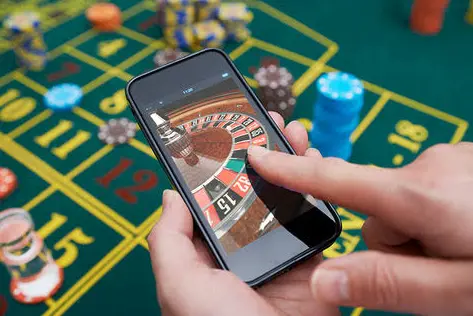
The Architectural Foundation of Automated Casino Settlements
At their core, these self-executing agreements are deployed on decentralized ledgers such as Ethereum, Solana, or Polygon. When a player places a wager, the funds are locked into the contract's escrow logic. Once the game's random number generator or oracle feeds the final outcome on-chain, the contract autonomously verifies the result against the bet parameters. If the win condition is satisfied, the payout is triggered without any human signature or back-office approval. This deterministic execution is the cornerstone of trustless casino payout automation.
Oracle Networks and Provably Fair Randomness
The critical challenge lies in bridging off-chain game data with on-chain settlement. Decentralized oracle networks like Chainlink provide tamper-proof randomness via VRF (Verifiable Random Function). This cryptographic proof ensures that neither the house nor the player can manipulate the outcome. Once the oracle publishes the verified random seed, the smart contract computes the winner and disburses the exact payout amount to the player's non-custodial wallet within seconds. The transparency of this process is unmatched by traditional server-based platforms. 🔗

Eliminating Intermediaries and Chargeback Risks
Traditional payout rails involve payment processors, banks, and compliance teams, each introducing delays and fees. Smart contracts bypass these intermediaries entirely. The payout logic is immutable: if the player wins, the funds move. There is no possibility of a reversed transaction or a disputed chargeback because blockchain finality is absolute. For operators, this drastically lowers operational overhead and fraud exposure, while players enjoy instant liquidity access. The automation also enables micro-betting and high-frequency wagering that would be impractical under manual settlement models.
Programmable Bonus Distribution and Jackpot Pools
Beyond standard wagers, these contracts can encode complex payout structures. Progressive jackpots, for example, can be pooled across multiple casino dApps, with the contract automatically allocating a percentage of each bet to the prize pool. When the jackpot condition is met, the entire pool is instantly transferred to the winner's address. Loyalty rewards, rakeback, and referral commissions can likewise be distributed programmatically, ensuring precision and eliminating accounting errors. This level of programmable automation is redefining player expectations for speed and fairness. 🎰
Auditability and Regulatory Implications
Every transaction and state change is recorded on an immutable ledger, providing a complete audit trail for regulators and players alike. This radical transparency fosters a new era of accountability in online gambling. Operators can demonstrate compliance through on-chain analytics, while players can independently verify that payouts adhere to the published rules. As jurisdictions begin to recognize the legitimacy of decentralized gambling protocols, the adoption of smart contract-based payout systems is poised for exponential growth. The fusion of cryptography and casino gaming is not a fleeting trend—it is the next evolutionary step in digital wagering infrastructure.